World Open Data Day – advocating for transparency and broad access to data

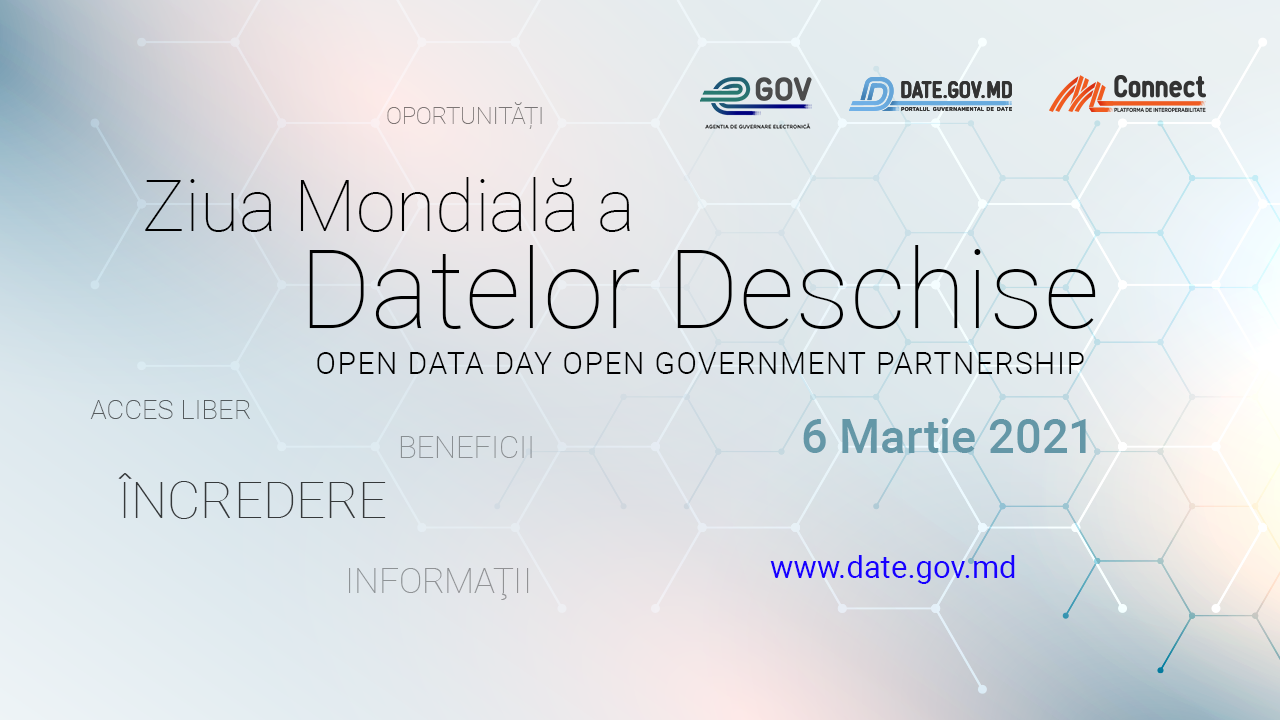
First proposed in 2010, the Open Data Day is marked annually by a series of events organized globally and nationally, which are designed to raise public awareness of the opportunities and benefits of access to data. The initiative aims to promote and encourage the adoption of open data policies in governments, business and civil society organizations.
Open governance means free access to information and trust in public institutions, and this goal can be achieved by creating applications and concepts to promote, access and use open data available for everyone.
At national level, in order to achieve open governance, a mechanism has been set up in the form of an Open Government Steering Committee, made of representatives of the civil society and of the Government, including the e-Governance Agency. The mission of this entity is to draft proposals and recommendations on the implementation of the principles of transparent governance, measures that are required from all member states of the Open Government Partnership, to which the Republic of Moldova is a party.
In this context, the e-Governance Agency created the Government Data Portal www.date.gov.md - a public information resource and a virtual one-stop shop of public sector data. The platform contains open, real-time datasets from ministries and other central government institutions. The portal is continuously completed and improved in order to facilitate citizens' access to data, their active participation in the decision-making process, as part of the global Open Government Partnership initiative.
Currently, more than one thousand datasets are available on the public data portal, comprising over 10,000 resources and increasing every year. In 2020 alone, about 80 million data queries were made, i.e. over 200 thousand queries per day on average.
World Open Data Day has been celebrated for 10 consecutive years, since 2011, and is an initiative of states seeking transparent, efficient and open governance for their citizens, developed on the basis of new information technologies.


